Sewage Cleanup Cost Savannah GA
What Does Sewage Cleanup Cost in Savannah, GA? A Complete Local Pricing Guide
Sewage cleanup in Savannah, GA typically costs between $2,000 and $10,000 for most residential jobs, with contractors pricing work at $7 to $14 per square foot. Historic District homes, Savannah’s year-round humidity, and aging clay pipe infrastructure routinely push total remediation costs above the national average once mold remediation and structural demolition are factored in. What to ask before hiring a sewage cleanup company can help you avoid costly mistakes from the first phone call.
Why Sewage Cleanup Costs More in Savannah Than the National Average
National cost guides are a useful starting point, but Savannah is not a typical American city, and sewage cleanup pricing reflects that reality in several concrete ways.
The city’s housing stock has a median age of 55 years, with a significant share of homes in the Historic District still relying on cast iron and clay tile drain systems installed in the mid-twentieth century or earlier. Savannah’s coastal sandy-clay soil shifts seasonally: the clay fraction swells against buried sewer lines during summer storms, and the sandy component erodes around pipe joints over decades. Root intrusion through clay bell joints is the single most common repair driver in this market.
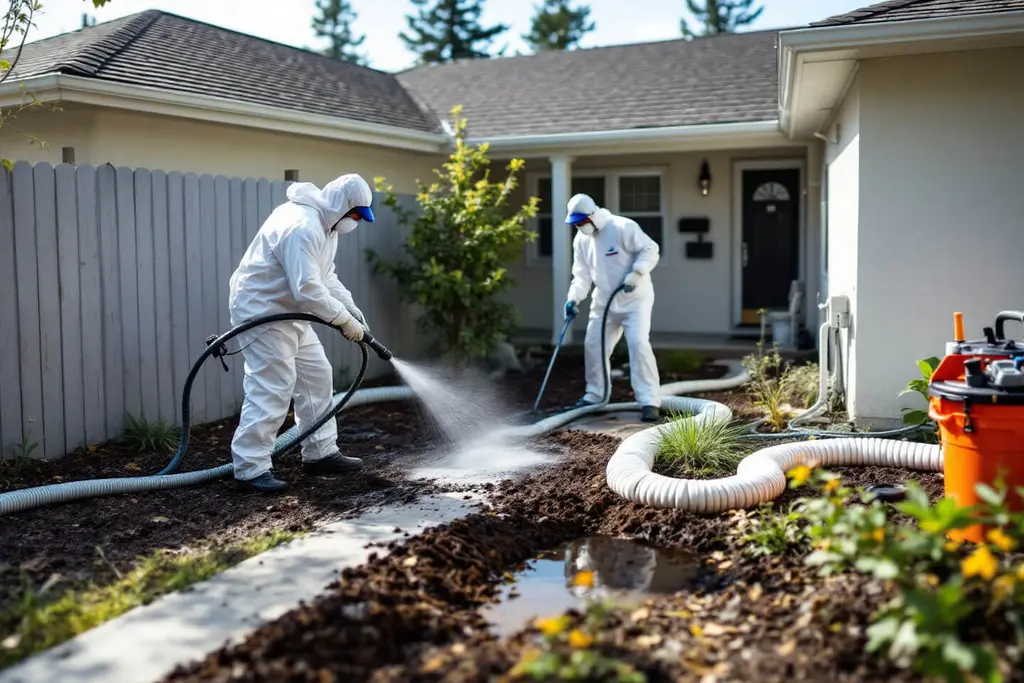
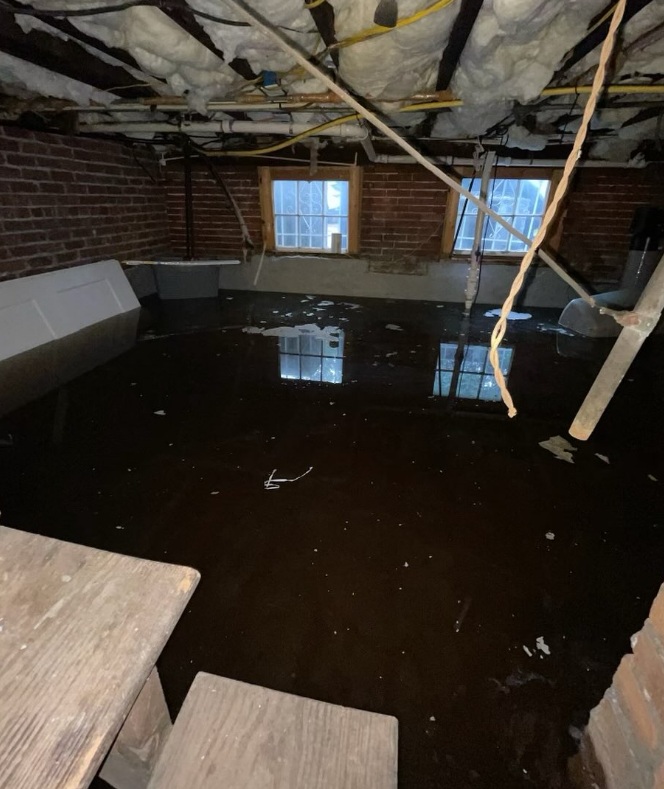
Then there is the IICRC standard that governs how Category 3 contaminated water, the technical classification for raw sewage, must be treated. Porous materials that absorb sewage cannot be cleaned; they must be removed. In a house with brick-on-sand floors, tabby walls, or heart pine subfloors, that rule reaches far further than it would in a poured concrete basement in Atlanta or Charlotte. A Savannah cleanup estimate that looks high compared to a national average is often simply accurate.
Finally, Savannah’s relative humidity ranges from 70 to 90 percent year-round, making Chatham County one of Georgia’s highest-risk environments for secondary mold growth after any water intrusion event. When sewage-contaminated moisture sits in walls, subfloors, or ceiling cavities even briefly, professional mold remediation becomes a near-certain add-on cost.
Sewage Cleanup Cost Breakdown: Savannah vs. National Benchmarks
The table below compares published national pricing from HomeGuide’s sewage cleanup cost guide against local Savannah context, so you can build a realistic budget before the first contractor walks through your door.
| Scope of Damage | National Average Range | Savannah Estimated Range | Key Local Cost Drivers |
|---|---|---|---|
| Small spill, single room | $2,000 to $3,000 | $2,200 to $3,500 | Extended drying time due to high ambient humidity |
| Medium backup, multiple rooms | $3,000 to $7,000 | $3,500 to $8,500 | Mold remediation likely required; older flooring demolition |
| Large contamination | $7,000 to $15,000 | $8,000 to $18,000 | Historic material removal, tabby or brick subfloor replacement |
| Extensive damage with full restoration | $15,000 to $50,000+ | $18,000 to $55,000+ | Structural repairs, sewer line replacement, mold, historic preservation compliance |
| Mold remediation add-on | $10 to $25 per sq ft | $10 to $30 per sq ft | Savannah’s 70 to 90% year-round humidity accelerates mold colonization |
| Emergency response and initial inspection | $500 to $1,500 | $500 to $1,500 | Consistent with national; 24/7 availability standard among local firms |
| Professional inspection and evaluation | $150 to $500 | $150 to $500 | Consistent with national average |
What Is Category 3 Water Damage and Why Does It Matter for Pricing?
The IICRC S500 Standard classifies water damage into three categories based on contamination level. Category 1 is clean water from a supply line break, priced at roughly $3 to $7 per square foot nationally. Category 2, or gray water from appliances or sink overflows, runs $6 to $10 per square foot. Category 3, called blackwater, covers raw sewage backups, floodwater carrying contaminants, and any water that has touched sewage. That classification carries a price of $7 to $14 per square foot and, in Savannah’s older housing stock, frequently higher once demolition of contaminated historic materials is required.
Category 3 matters beyond pricing because it dictates the scope of required demolition. No licensed restoration company should leave sewage-saturated drywall, insulation, carpet, or organic subflooring in place, regardless of how dry it appears. Pathogens including E. coli, hepatitis A, and various parasites survive in porous building materials for days. This is not a cleanup situation where partial treatment is a legitimate option.
Does Homeowners Insurance Cover Sewage Backup in Georgia?
This is the question Savannah homeowners ask most often, and the answer requires precision. A standard Georgia homeowners insurance policy does not automatically cover sewer or drain backup. Coverage must be added as a separate endorsement, typically costing $40 to $160 per year depending on the carrier and coverage limits. Without that endorsement, a $10,000 sewage cleanup claim will be denied.
There is an important distinction between a backup that originates inside your home and one that originates in the city’s system. Savannah operates approximately 750 miles of sewer lines across the city limits and surrounding areas including Wilmington Island, Whitemarsh Island, and Southbridge. When a city-side blockage causes a backup into your home, you may have grounds for a claim against the municipality rather than your insurer. Document everything with timestamped photos before any cleanup begins, and contact both your insurance carrier and the City of Savannah’s Public Works department to establish which side of the clean-out the blockage originated.
Flood insurance through FEMA’s National Flood Insurance Program covers sewer backup only when it is directly caused by a flood event, not from a standalone pipe failure or tree root intrusion. Given that Savannah is a How to prepare your home for hurricane season flooding in Savannah, GA environment with documented flood risk from storm surge, riverine overflow, and drainage system failures, confirming your NFIP or private flood policy terms before storm season is a practical step worth taking each spring.
Savannah’s Flooding and Sewer Infrastructure: Why the Risk Is Growing
Savannah’s sewage backup risk is not merely a function of aging pipes. The city’s position in a low-lying coastal zone means it faces flood pressure from three directions simultaneously: storm surge from the coast, riverine flooding from the Savannah River basin, and ponding from rainfall that overwhelms a drainage network with infrastructure in some areas exceeding a century in age.
The scale of rainfall events in recent years illustrates the problem concretely. In a single August, Savannah received 11.79 inches of rain against a 30-year average of 6.79 inches, nearly doubling its historical monthly benchmark. The city recorded 13 minor sewage spills and two major spills through that period as the combined stormwater and sewer network struggled to manage the volume. In January 2026, the Savannah City Council approved the creation of a dedicated Stormwater Utility, establishing a new funding mechanism specifically to address aging drainage infrastructure. That decision reflects a formal acknowledgment that the current system is under stress.
For homeowners, particularly those in low-elevation neighborhoods, near tidal creeks, or in the Historic District, this infrastructure context translates directly into elevated sewage backup risk during any significant storm. Backwater valves are one of the most cost-effective mitigation tools available, typically running $300 to $600 installed, and they prevent city sewer surges from traveling back through your lateral into your home.
Neighborhood-Level Risk Differences Across Savannah
Historic District and Victorian District
These neighborhoods carry the highest remediation cost risk of any Savannah submarket. Homes here frequently have original or early-replacement clay tile laterals, brick-on-sand or tabby construction that absorbs contamination deeply, and heart pine subfloors that cannot be salvaged after Category 3 exposure. Expect cleanup estimates that run 20 to 35 percent above the city average for comparable square footage.
Midtown and Thomas Square
Mid-twentieth-century construction in these neighborhoods means cast iron drain lines that are prone to corrosion and joint separation. Costs typically fall closer to the citywide average, though mold risk remains elevated given the regional humidity.
Pooler, Richmond Hill, and Newer Subdivisions
PVC plumbing and newer construction substantially reduce pipe failure risk, and remediation costs for a comparable backup event tend to run lower than in older neighborhoods. That said, these areas are not immune. Improperly installed clean-outs and undersized laterals in fast-growing subdivisions have created their own backup patterns.
Isle of Hope and Coastal Areas
Tidal influence on the water table in coastal Savannah neighborhoods means that seasonal high tides can hydraulically load the sewer system even without rainfall, contributing to backups that appear without obvious cause. Homes in these areas should be inspected for backwater valve installation if none currently exists.
Savannah Permits, Regulations, and Who to Call First
Georgia’s Department of Public Health oversees septic tank installation and sewage treatment through its Environmental Health Section, which works alongside county health departments to enforce standards, issue permits, and conduct inspections. For Savannah properties on septic systems, the Chatham County Board of Health requires permits and site evaluations before any new installation or significant repair. According to EPA guidance on how septic systems work, proper permitting protects groundwater and neighboring properties, not only the homeowner’s own system.
For properties connected to the city sewer, the City of Savannah requires a Water and Sewer Approval Form for commercial renovations, and discharging sewage or polluted water to any natural outlet within city limits is prohibited by municipal code except where suitable treatment has been provided. If your contractor proposes to pump contaminated water to a storm drain or surface water body, that is a code violation, and you bear liability exposure if you authorize it.
When a backup occurs, the practical sequence is: call a licensed restoration company for immediate extraction and containment, then contact your insurer to open a claim, and finally contact the City of Savannah’s Public Works line if there is any reason to believe the backup originated from the city’s system rather than your lateral.
How Long Does Sewage Cleanup Take?
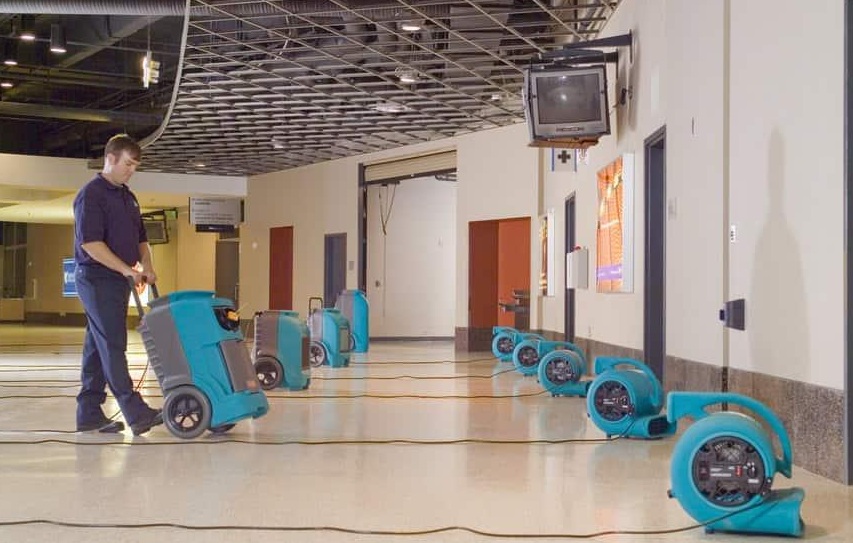
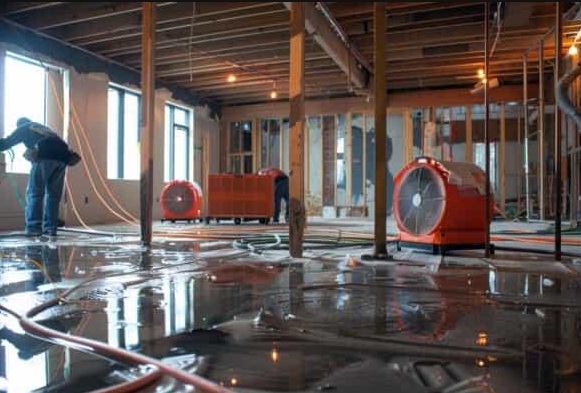
A straightforward single-room backup with no structural damage typically requires two to four days for extraction, drying, and disinfection. A multi-room event with contaminated drywall and flooring that must be demolished and removed commonly runs seven to fourteen days before reconstruction can begin. In Savannah’s humidity, drying validation with moisture meters is particularly important because ambient moisture in the air slows structural drying even with industrial dehumidifiers running. A restoration company that declares a job complete after two days of drying in a Savannah summer without documented moisture readings should be questioned closely. The IICRC’s restoration standards require documented drying goals, not visual assessment alone.
Can You Handle Sewage Cleanup Yourself?
Georgia’s public health regulations restrict what property owners can do with Category 3 waste. Beyond the legal dimension, raw sewage contains pathogens capable of causing serious illness from skin contact alone, including leptospirosis, hepatitis A, salmonella, and E. coli. Without proper personal protective equipment (N95 respirator or better, chemical-resistant gloves, eye protection, and disposable coveralls), self-remediation is a genuine health risk, not merely a quality-of-work concern.
The practical answer is that minor surface cleanup in areas with no porous materials and no structural penetration can be managed by a careful homeowner with appropriate PPE and disinfectant. Any backup that has reached drywall, subfloor, insulation, or has been sitting for more than a few hours in Savannah’s climate should be handled by licensed professionals with the equipment and documentation trail that insurers and future buyers will expect.
For a reliable, locally experienced team that understands Savannah’s historic housing stock and climate conditions, Hadyson Water Restoration provides 24/7 emergency response with the documentation standards required for insurance claims and the local expertise to handle Category 3 events in everything from Victorian cottages to new construction.
Frequently Asked Questions About Sewage Cleanup Costs in Savannah, GA
How much does sewage backup cleanup cost in Savannah, GA?
Most residential sewage cleanup jobs in Savannah cost between $2,000 and $10,000, with contractors typically charging $7 to $14 per square foot. Historic homes with brick, tabby, or heart pine construction and Savannah’s year-round high humidity can push total costs, including mold remediation, above the national average for comparable square footage.
Does homeowners insurance cover sewage backup in Georgia?
Standard Georgia homeowners policies do not cover sewer or drain backup unless you have added a specific endorsement, typically $40 to $160 per year. Flood insurance through NFIP covers sewage backup only when caused directly by a flood event. Confirm your coverage terms before storm season each year to avoid unexpected out-of-pocket expenses.
How do you get rid of sewage smell after a backup?
Sewage odor after a backup indicates that contaminated material, whether liquid, biofilm, or saturated building materials, remains present. Proper odor elimination requires complete extraction, demolition of affected porous materials, antimicrobial treatment of all surfaces, and thorough structural drying. Masking agents and deodorizers alone do not eliminate the underlying contamination or the health risk it represents.
Can a sewage backup make you sick?
Yes. Raw sewage is Category 3 blackwater containing bacteria including E. coli, salmonella, and leptospirosis, along with hepatitis A and intestinal parasites. Exposure through skin contact, inhalation of aerosols, or touching contaminated surfaces and then your face presents genuine health risk. Children, elderly individuals, and anyone immunocompromised face the greatest danger from exposure.
When is the City of Savannah responsible for a sewage backup versus the homeowner?
The city is responsible for its main sewer lines, while homeowners are responsible for their lateral, the pipe connecting the home to the city main. If a blockage in the city main caused the backup, the municipality may bear liability. Document the event with timestamped photos and contact Public Works promptly to have the city’s system inspected before making any determination about fault.
How does Savannah’s humidity affect sewage cleanup costs?
Savannah’s relative humidity ranges from 70 to 90 percent year-round, significantly slowing structural drying and creating near-ideal conditions for mold growth after any water intrusion. After a sewage backup, mold can begin colonizing damp materials within 24 to 48 hours. This means mold remediation, adding $1,500 to $6,000 or more, becomes a likely cost component in most Savannah sewage cleanup projects.
If you are dealing with a sewage backup now or want to understand your risk and options before an emergency occurs, Hadyson Water Restoration serves Savannah and the surrounding Chatham County area with licensed technicians, insurance documentation support, and the local experience to handle Category 3 remediation in Savannah’s distinctive housing stock. Call for a same-day assessment and get accurate, transparent pricing before any work begins.