Storm Damage Restoration Cost Savannah GA Guide
Storm Damage Restoration Cost Savannah GA Guide
What Does Storm Damage Restoration Cost in Savannah, GA?
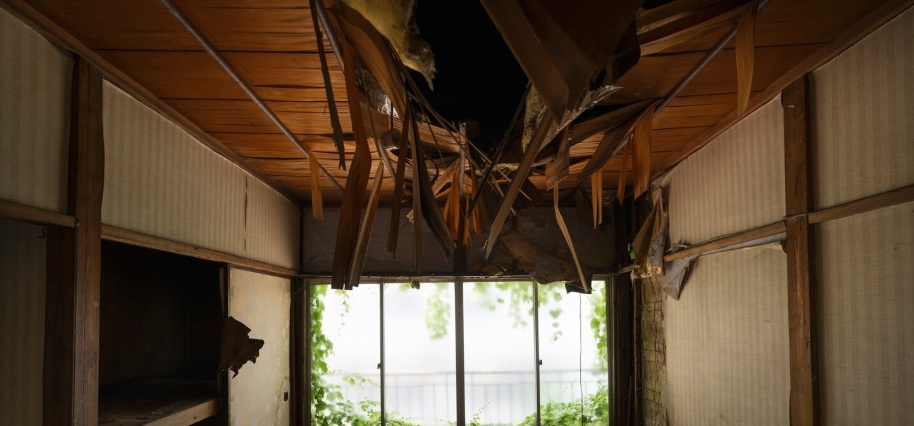
Most Savannah homeowners pay between $2,800 and $7,000 for storm damage restoration, depending on damage type and scope. Minor repairs start around $1,384, while extensive hurricane damage can exceed $25,000. Factors like flood zone location, mold risk, and Chatham County permit requirements all affect the final cost. Read on for a full Savannah-specific breakdown.
Savannah sits in one of the most storm-vulnerable positions on the East Coast. With roughly 77% of buildings in the city at flood risk and the Atlantic hurricane season running June through November, the question of storm damage restoration cost is not hypothetical for most local homeowners. It is something you may face with very little warning, often in the middle of summer when humidity accelerates every secondary problem that comes with a breach in your home’s envelope.
According to NOAA’s National Centers for Environmental Information, Georgia experienced 134 confirmed billion-dollar weather and climate disaster events between 1980 and 2024, including 68 severe storm events and 27 tropical cyclone events. The annual average for the most recent five-year period, 2020 through 2024, jumped to 9.8 events per year, more than triple the historic baseline of 3.0. For Savannah, that trend is not an abstraction. It is your neighborhood.
This guide covers everything you need to know before, during, and after a storm: real cost tiers, what drives prices up or down locally, Chatham County’s permit and floodplain requirements, the FEMA 50% rule, insurance distinctions most homeowners miss, and how to avoid contractor fraud in the chaotic days after a major storm.
Savannah Storm Damage Restoration Costs: A Tier-by-Tier Breakdown
The single most important thing to understand about storm restoration pricing in Savannah is that the local range and the national average tell very different stories. Nationally, Angi reports that homeowners spend an average of $12,331 on storm damage repairs, with the typical range falling between $2,641 and $22,127. Large, complex damage can push past $60,000.
Savannah’s local numbers track somewhat lower for typical events, but severe hurricane-related damage closes that gap quickly. Here is how costs break down across three tiers in the local market:
| Damage Tier | Typical Scope | Savannah Cost Range | Common Triggers |
|---|---|---|---|
| Minor | Single area, partial roof damage, small water intrusion | $1,384 to $3,500 | Pop-up thunderstorm, isolated wind event, minor hail |
| Moderate | Multiple areas, wind-driven rain, damaged siding or windows | $3,500 to $7,000 | Named tropical storm, sustained thunderstorm system |
| Extensive | Full or partial roof replacement, structural damage, flooding, gutters, trusses | $7,000 to $25,000+ | Direct hurricane impact, storm surge flooding, Category 1 or higher landfall |
Cost by Damage Type
Beyond overall severity, the type of damage is the biggest single driver of cost. Wind damage and water damage carry very different remediation requirements, and Savannah homes routinely face both simultaneously.
Roof damage runs from roughly $5,000 for minor patching up to $25,000 for a full replacement following a major storm. Even partial roof failures in Savannah’s climate demand urgent attention because every hour of delay exponentially increases water intrusion risk into structural components and insulation.
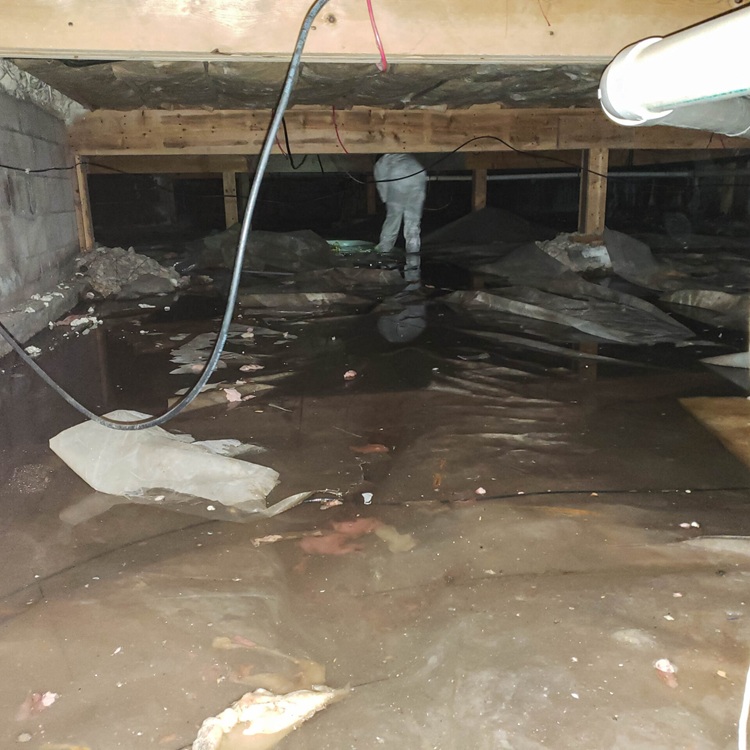
Water damage cleanup alone, separate from any structural repairs, typically costs between $1,000 and $4,000 for flood or heavy rain events. If mitigation is delayed and standing water is allowed to persist, water damage remediation costs can reach $2,000 to $5,000 before repairs even begin.
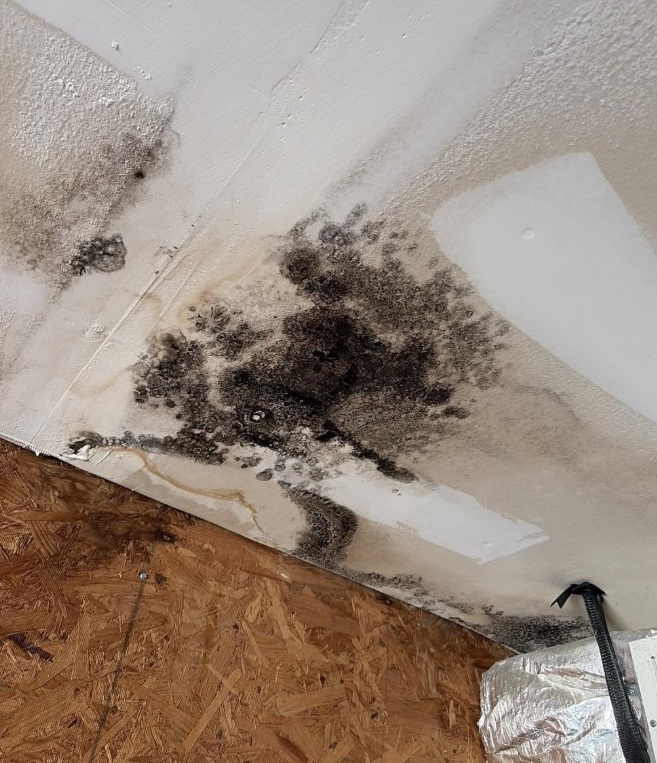
Mold remediation adds $1,000 to $10,000 depending on the size of the affected area, and it is a cost that catches many Savannah homeowners off guard. In Savannah’s subtropical climate, mold can begin colonizing wet drywall, insulation, and wood framing within 24 to 48 hours of a storm opening. That window is not a generalization. It is a documented biological reality at the humidity levels Savannah sees in summer and fall. A restoration crew that arrives 72 hours after a storm may well be treating a mold problem that did not exist when the storm made landfall.
Tornado-related repairs range from $4,600 to $17,000 nationally, depending on how many structural systems are involved. Savannah does not see tornado landfalls as frequently as central Georgia, but tornadoes do spin off from hurricane outer bands and can cause concentrated structural damage in isolated areas.
Add-on costs that homeowners often overlook include emergency tarping ($500 to $1,500), debris removal ($300 to $1,500), and permit fees, which vary by project scope and are discussed in detail below. Labor for professional storm damage specialists runs $50 to $150 per hour, with roofing and structural work at the higher end of that range.
Chatham County Permits and the Floodplain Review Process
This is where Savannah storm restoration diverges sharply from what homeowners in inland Georgia experience, and it is the section most other restoration guides skip entirely.
A building permit is required for most structural repairs in Chatham County. But in Savannah, there is a second layer of review that applies whenever a property sits within a Special Flood Hazard Area. According to the Chatham County Engineering Department’s Floodplain Development Review, if your home suffers damage from any source, including a hurricane, fire, or any other event, and repairs require a building permit, floodplain review and approval must be obtained before that building permit is issued.
Properties in A, AE, or VE flood zones are located within what FEMA designates as the Special Flood Hazard Area. If you are unsure whether your property qualifies, the City of Savannah’s Building Safety and Regulatory Services office can be reached at 912-651-6530. For contractors and homeowners alike, bypassing this step is not a minor paperwork oversight. It can result in permit revocation, stop-work orders, and liability exposure if subsequent flood damage occurs on an unreviewed property.
The FEMA 50% Rule: What Savannah Homeowners Must Know
The FEMA 50% Rule is among the most consequential and least understood aspects of storm restoration in coastal Georgia. A structure is considered “Substantially Damaged” under FEMA standards when the cost to restore it equals 50% or more of the market value of the structure, not the land.
With the average Savannah home valued at approximately $335,719, that threshold sits around $167,000 in repair costs. Triggering the Substantial Damage determination does not simply add paperwork. It requires the entire structure to be brought into full floodplain compliance before repairs can proceed, which can mean elevation, floodproofing, or in some cases demolition and relocation depending on the zone classification.
On the positive side of the ledger, homeowners with a standard flood insurance policy through the National Flood Insurance Program may qualify for Increased Cost of Compliance coverage, which provides up to $30,000 to help fund the mandatory upgrades. If you have NFIP coverage and your home triggers the 50% threshold, filing for ICC benefits should be one of your first calls after stabilizing the property.
Homeowners Insurance vs. Flood Insurance: A Distinction That Costs Thousands
This is one of the most expensive misunderstandings in Savannah’s post-storm landscape. Standard homeowners insurance covers wind damage and wind-driven rain that enters through a breach in the structure, such as a broken window or a compromised roof. It does not cover flooding from external water sources, including storm surge, overflowing drainage systems, or rising tidal water.
In Savannah, where storm surge from the Atlantic is a documented hazard and where the city’s flat terrain and tidal influence from the Savannah River create chronic drainage challenges during heavy rain events, many properties face both wind damage and flood damage from the same storm. If you have only homeowners insurance and no separate NFIP or private flood policy, the wind damage to your roof may be covered while the water that entered through the street and flooded your first floor is not.
Understanding this distinction before you file a claim prevents rejected claims, disputes with adjusters, and the financial shock of discovering a significant portion of your restoration cost has no coverage. How to choose a storm damage restoration company after a hurricane covers this in greater detail, including what documentation to prepare before your adjuster arrives.
How Long Does Storm Damage Restoration Take in Savannah?
Timeline expectations are rarely addressed in local restoration content, and they matter enormously for displacement planning, insurance reimbursement, and mold prevention decisions.
Emergency stabilization, which includes tarping damaged roofs, boarding windows, and extracting standing water, should happen within 24 hours of the storm passing and is often the most time-sensitive phase for preventing secondary damage.
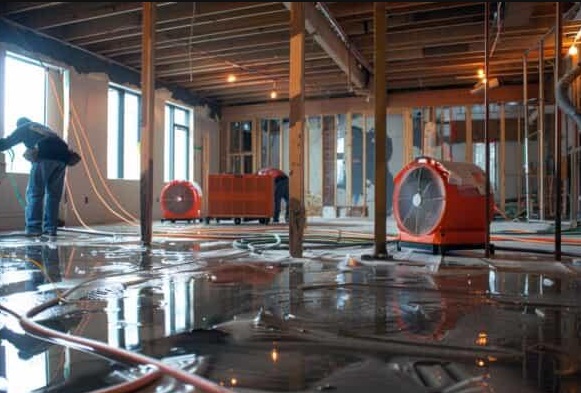
Structural drying in Savannah’s humid climate typically requires five to ten days of industrial dehumidification and air movement to bring moisture content in structural wood down to safe levels. Attempting to skip or compress this phase causes mold problems within weeks of completing repairs.
Permit processing and floodplain review adds variable time. In normal circumstances, Chatham County targets a standard permit turnaround. After a major hurricane event, when hundreds of permits are submitted simultaneously, that timeline can stretch considerably. Building this delay into your project schedule rather than being surprised by it helps with temporary housing arrangements and insurance claims.
Reconstruction, depending on the tier of damage, can run from two weeks for moderate repairs to three to six months for extensive structural work following a direct hurricane impact.
Avoiding Contractor Fraud After a Savannah Storm
Storm chasing contractors are a well-documented problem after any significant named storm, and coastal Georgia has seen its share. Several red flags warrant immediate caution.
Contractors who arrive unsolicited within 24 to 48 hours of a storm, demand large upfront payments before work begins, offer to waive your deductible (a practice that constitutes insurance fraud in Georgia), or pressure you to sign an Assignment of Benefits document before your insurance company has completed its assessment are not operating in your interest.
Before signing any contract for restoration work, verify the contractor holds a current Georgia State Contractor license, carries both general liability and workers compensation insurance, and is willing to provide local references from past storm restoration jobs. Hadyson Water Restoration operates locally in Savannah and can be verified through standard licensing channels, which is the baseline expectation for any company you invite onto your property after a loss event.
Cost-Saving Strategies Specific to Savannah Homeowners
Several approaches can meaningfully reduce your exposure before and after a storm event, and most are underutilized in this market.
Wind mitigation retrofits, including hurricane straps on roof trusses, impact-resistant windows, and reinforced garage doors, can qualify Savannah homeowners for insurance premium discounts. Florida has led this practice more aggressively than Georgia, but Georgia insurers do recognize wind mitigation credits and may offer meaningful reductions on your annual premium in exchange for a certified mitigation inspection.
Maintaining current and correct flood zone status through FEMA’s Letter of Map Amendment process can reclassify properties that have been erroneously included in high-risk flood zones, removing mandatory flood insurance requirements and reducing annual carrying costs significantly.
Scheduling pre-storm inspections of roofing, gutters, soffits, and exterior sealants each spring, before hurricane season begins, allows minor vulnerabilities to be addressed at normal pricing rather than in the post-storm surge environment when contractor demand spikes and lead times lengthen.
If you have already experienced storm damage, you can find Hadyson Water Restoration in Savannah GA for emergency response and an accurate, no-pressure assessment of what your specific restoration scope requires.
Frequently Asked Questions
How much does storm damage restoration cost in Savannah, GA?
Most Savannah homeowners pay between $2,800 and $7,000 for storm damage restoration. Minor repairs start near $1,384, while extensive hurricane damage with structural and flooding components can reach $25,000 or more. Chatham County’s flood zone regulations and mold risk from subtropical humidity can add to the total project cost.
Does homeowners insurance cover storm damage repair in Savannah?
Standard homeowners insurance covers wind damage and wind-driven rain that enters through a storm-created opening. It does not cover flooding from external sources like storm surge or street flooding. Savannah homeowners in flood zones need a separate NFIP or private flood insurance policy to cover that exposure, as both damage types frequently occur in the same event.
What is the FEMA 50% rule and how does it affect Savannah storm repairs?
The FEMA 50% rule designates a property as Substantially Damaged when repair costs reach 50% or more of the structure’s market value. For a typical Savannah home, that threshold is around $167,000. Triggering it requires full floodplain compliance upgrades before repairs proceed. NFIP policyholders may access up to $30,000 in Increased Cost of Compliance benefits to help fund those upgrades.
Will storm damage cause mold in my Savannah home?
Yes, and the timeline is significantly compressed in Savannah’s climate. Mold can begin growing within 24 to 48 hours of unmitigated water intrusion. Savannah’s high summer humidity accelerates colonization in wet drywall, insulation, and framing. Emergency water extraction and professional structural drying within the first 24 hours is the most effective way to prevent mold remediation costs from being added to the project.
How do I find a reputable storm damage restoration company in Savannah?
Verify that any company holds a current Georgia contractor license, carries liability and workers compensation insurance, and has documented local references. Avoid contractors who arrive unsolicited after storms, demand large upfront payments, or ask you to sign Assignment of Benefits documents before your insurer completes its assessment. Local companies with a verifiable local track record are the safest choice after any significant storm event.
Do I need a permit for storm damage repairs in Chatham County?
Yes. Most structural storm repairs in Chatham County require a building permit, and properties in Special Flood Hazard Areas require an additional floodplain review and approval before that permit is issued. Skipping this step can result in stop-work orders and compliance liability. Contact the City of Savannah Building Safety office at 912-651-6530 with questions about your specific property and repair scope.
When a storm moves through Savannah, the clock starts immediately on water intrusion, mold risk, and the regulatory process that governs what repairs you can make and how. Getting an accurate assessment from a licensed local restoration company within the first 24 hours is not just about speed. It is about having the right documentation, the right scope, and the right understanding of what Chatham County and your insurance carriers will require before the work can begin. Hadyson Water Restoration serves homeowners and property managers across the Savannah area with emergency response, full-scope damage assessment, and the local regulatory knowledge that out-of-town storm chasers cannot replicate. Reach out immediately after a storm event so you have the facts before your insurance adjuster arrives.